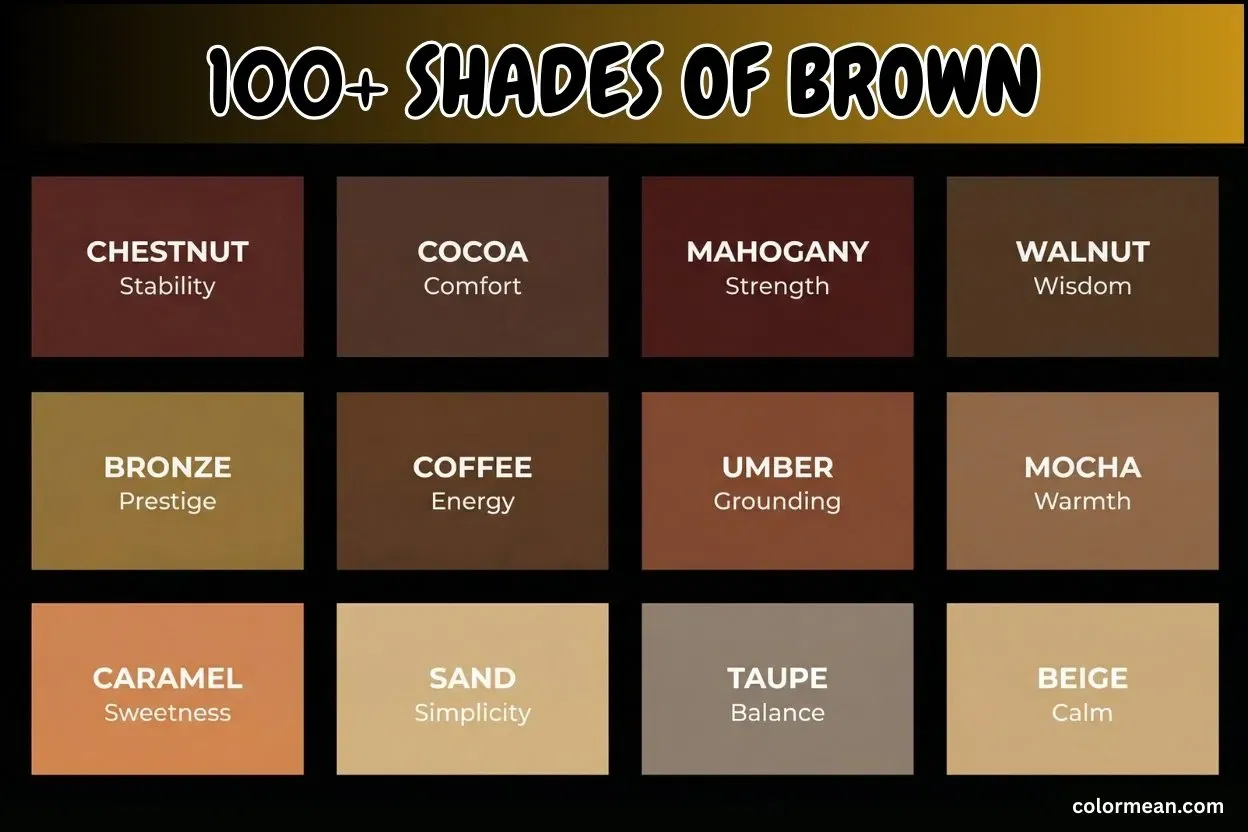
Brown is more than just a color. It carries warmth, stability, and natural charm. In this post, you will explore over 100 shades of brown. From soft beige to rich walnut, each shade has its own character and story.
Shades of brown can be created in many ways across different media. Because brown appears everywhere, its names aren’t always precise—one name like tan can cover a range of tones. Some of the most familiar shades include beige, chestnut, khaki, taupe, walnut brown, and maroon.
We include hex, RGB, and CMYK codes for every color. You will also learn the meaning and common uses of each shade, making it simple to pick the right brown for design, art, or decoration.
By the end of this guide, you’ll know how each brown looks, feels, and works. You can quickly find the perfect shade for your project.
Let’s dive into the rich and earthy world of brown shades.
Almond
Almond is a pale, grayish beige that mimics the soft interior of the nut. Historically, it was a costly pigment made from ground shells. Furthermore, it is a classic neutral in interior design, often used for trim and walls. This color evokes a sense of softness, calm, and understated elegance. Consequently, it is popular in wedding palettes, spa branding, and minimalist product design. Its warmth is subtle and universally flattering.
Bronze
Bronze is a moderate yellow-brown metal color, named after the copper-tin alloy. Historically, it signified third place in competitions. This hue carries connotations of antiquity, endurance, and victory. Therefore, it is frequently used for statues, awards, and rustic hardware. Its warm, muted tone adds a grounded, historical feel to designs.
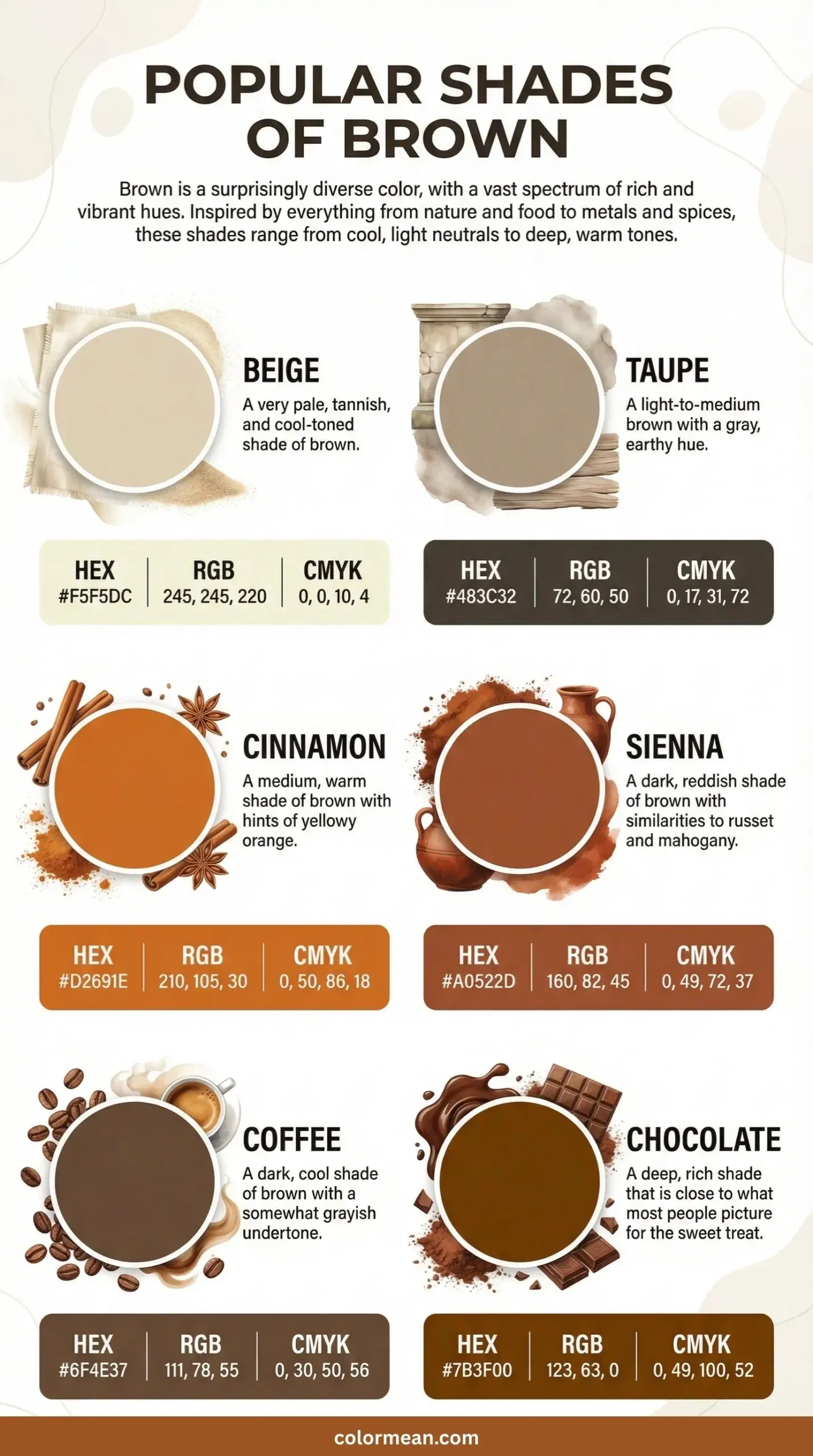
Chocolate
Chocolate is a deep, rich brown named after the roasted cocoa bean. It has been associated with luxury and indulgence for centuries. This color conveys warmth, comfort, and reliability. Consequently, it is a staple in food packaging, cozy interiors, and leather goods. Chocolate provides a sophisticated and grounded base in color palettes.
Camel
Camel is a light, reddish-yellow brown named after the fur of the dromedary camel. It became a fashion staple in classic coats and suiting. This color represents understated luxury, practicality, and neutrality. Thus, it is essential in high-end fashion, interior design for textiles, and neutral branding. Camel is timeless and effortlessly elegant.
Fawn
Fawn is a soft, light yellowish-brown, reminiscent of a young deer’s coat. It is a gentle, natural color often found in animal camouflage. Fawn suggests innocence, warmth, and approachability. As a result, it is used in nursery decor, soft furnishings, and naturalistic designs. This color provides a soothing and tender backdrop.
Coffee
Coffee is a dark, grayish brown that resembles brewed espresso. It is directly named after the popular global beverage. This hue evokes sophistication, energy, and comfort. Therefore, it is prevalent in cafe branding, rustic decor, and fashion accessories. Coffee is a robust, familiar, and grounding dark neutral.
Mahogany
Mahogany is a strong reddish-brown named for the prized tropical hardwood. Historically, it symbolized wealth and craftsmanship in fine furniture. This color communicates richness, durability, and classic elegance. Consequently, it is used for luxury goods, wood finishes, and autumnal themes. Mahogany adds a deep, warm, and formal accent.
Burnt Umber
Burnt Umber is a dark, reddish-brown earth pigment, created by heating raw umber. It has been used in art since prehistoric times. This color embodies earthiness, stability, and antiquity. Thus, it is essential for artists’ paints, landscape palettes, and historical restoration. It provides a warm, opaque, and natural dark shade.
Tan
Tan is a pale brown tone named after the tanning process of converting hide into leather. It is a quintessential casual and summery color. Tan represents relaxation, utility, and the outdoors. Hence, it’s ubiquitous in khaki pants, summer hats, and safari-style design. This color is a versatile and neutral warm beige.
Buff
Buff is a light, yellowish-beige, historically named for buffalo leather. It was famously used for military uniforms in the 18th century. This color denotes durability, neutrality, and subtle strength. Accordingly, it is used in architectural trim, traditional uniforms, and paper goods. Buff is a quiet, warm, and historical neutral.
Saddle Brown
Saddle Brown is a dark, medium brown directly named for leather horse saddles. It is a quintessential western and rugged hue. This color conveys sturdiness, tradition, and the natural world. Thus, it is ideal for leather goods, rustic furniture, and outdoor apparel. Saddle Brown is a dependable, rich, and classic dark brown.
Cinnamon
Cinnamon is a warm, reddish-brown spice color. It has been valued for both flavor and pigment since ancient times. This hue suggests warmth, spice, and vibrant energy. Consequently, it is popular in fall decor, food branding, and warm-toned cosmetics. Cinnamon is an inviting and stimulating medium brown.
Chestnut
Chestnut is a deep, reddish-brown inspired by the nut of the sweet chestnut tree. It is a classic hair color descriptor. This color embodies richness, warmth, and reliability. Therefore, it is common in equestrian themes, autumn palettes, and classic fashion. Chestnut offers a hearty and familiar reddish-brown tone.
Burgundy
Burgundy is a deep, dark red-brown named for the wine region of France. It is historically associated with nobility and sophistication. This color signifies luxury, power, and refined taste. Hence, it is a staple in evening wear, academic regalia, and premium wine labels. Burgundy is a formal, powerful, and elegant dark red.
Dark Brown
Dark Brown is a very deep, almost blackish brown, representing the ultimate depth of the brown spectrum. It is a fundamental natural and utilitarian color. This hue communicates solidity, earthiness, and seriousness. As a result, it is used for soil, dark wood, and formal leather accessories. Dark Brown is the definitive anchor color in design.
Khaki
Khaki is a light tan-brown with a slight yellowish tint, originating from the Persian word for “dust.” It was adopted for military uniforms for camouflage. This color denotes utility, casualness, and a practical nature. Thus, it is universal in casual trousers, safari gear, and utilitarian design. Khaki is a globally recognized neutral.
Mocha
Mocha is a grayish, medium brown, named after the coffee-chocolate drink and the port city of Mocha. It is a modern and sophisticated neutral. This color evokes comfort, warmth, and subtle complexity. Consequently, it is favored in contemporary interiors, cozy knitwear, and cafe aesthetics. Mocha is a versatile, muted, and inviting brown.
Ochre
Ochre is a strong yellow-brown earth pigment, containing hydrated iron oxide. It is one of the oldest pigments used by humans, found in ancient cave art. This color represents the earth, primordial energy, and warmth. Therefore, it is used in artistic works, rustic design, and to evoke antiquity. Ochre is a historically rich and vibrant earth tone.
Copper
Copper is a reddish-brown metallic color, named for the malleable element. It has been used for tools and currency for millennia. This hue signifies conductivity, warmth, and a distinctive sheen. Accordingly, it is popular for electrical themes, jewelry, and autumnal decor. Copper has a vibrant, warm, and metallic personality.
Tuscan Red
Tuscan Red is a dark, earthy red with strong brown undertones, inspired by the Italian countryside. It was historically used on barn doors and early automobiles. This color conveys rustic warmth, old-world charm, and durability. Thus, it is ideal for historic restoration, rustic kitchenware, and classic car finishes. Tuscan Red is a deeply warm and nostalgic shade.
Nude
Nude is a pale, pinkish-beige tone intended to match a wide range of human skin tones. Historically, it was narrowly defined, but modern usage emphasizes inclusivity. This color evokes neutrality, naturalness, and subtle sophistication. Consequently, it is foundational in fashion hosiery, undergarments, and minimalist design. Nude aims to be an unobtrusive, universal base.
Red Ochre
Red Ochre is a rich, reddish-brown earth pigment, similar to ochre but with a higher iron oxide content. It has been used since prehistoric times for art and body decoration. This color signifies earth, blood, and primal connection. Therefore, it is used in fine art pigments, tribal art, and rustic pottery. Red Ochre is a deeply historical and warm color.
Wine
Wine is a very deep, purplish-red-brown that mimics the color of red wine. It is directly associated with viticulture and luxury. This hue conveys maturity, richness, and refined indulgence. Hence, it is a classic choice for elegant evening wear, upscale branding, and dining room decor. Wine is a decadent and complex dark red.
Golden Brown
Golden Brown is a warm, medium brown with strong yellow undertones, reminiscent of honey or wheat fields. It captures the glow of sunlight on earth. This color represents warmth, harvest, and approachable richness. As a result, it is popular in natural food packaging, autumnal designs, and welcoming interiors. Golden Brown is an optimistic and earthy tone.
Brass
Brass is a strong, yellow-brown metallic color, named for the copper-zinc alloy. It is less shiny than gold but carries a vintage, utilitarian feel. This color denotes warmth, tradition, and musicality (from brass instruments). Accordingly, it is used for hardware, fixtures, and antique finishes. Brass provides a warm, burnished metallic accent.
Cognac
Cognac is a deep, amber-brown named after the aged French brandy. It is associated with luxury, aging, and celebration. This color evokes sophistication, warmth, and timeless style. Consequently, it is a premier choice for luxury leather goods, fine packaging, and rich interior accents. Cognac is a refined and sumptuous shade.
Dark Red
Dark Red is a deep, intense shade of red with strong brown undertones, verging on maroon. It is a powerful, historic and dramatic color. This hue signifies strength, passion, and controlled intensity. Thus, it is used in formal academic gowns, luxury velvet, and warning elements. Dark Red is a potent and majestic color.
Puce
Puce is a dark, brownish-purple, whose name comes from the French word for flea. Historically, it was a controversial fashion color in the 18th century. This unusual color suggests eccentricity, antiquity, and a specific decadence. Therefore, it appears in historical costume design, unique fashion statements, and vintage textiles. Puce is a distinctive and complex shade.
Olive Green
Olive Green is a dark, yellowish-green with strong brown undertones, named for the unripe fruit. It is a quintessential military and camouflage color. This hue represents peace, endurance, and natural concealment. Consequently, it is ubiquitous in field gear, utilitarian fashion, and nature-themed design. Olive Green is a practical, earthy, and muted tone.
Russet
Russet is a dark, reddish-brown, historically associated with coarse homespun cloth worn by the peasantry. It is a humble and earthy color. This color conveys simplicity, autumn, and the rustic countryside. Hence, it is used for fall themes, rustic decor, and traditional academic dress. Russet is a warm, hearty, and unpretentious brown.
Light Brown
Light Brown is a pale, warm grayish-brown that sits at the lightest end of the brown spectrum. It is a versatile and approachable neutral. This color evokes warmth, simplicity, and natural comfort. Consequently, it is widely used in casual interiors, packaging for natural products, and as a background in web design. Light Brown is an unobtrusive and friendly base color.
Chestnut Rose
Chestnut Rose is a medium, rosy-brown that blends the warmth of chestnut with a dusty pink undertone. It is a delicate and feminine shade of brown. This color suggests soft warmth, vintage charm, and subtle romance. Therefore, it is ideal for vintage floral designs, cosmetic packaging, and soft furnishings. Chestnut Rose adds a gentle, warm blush to a palette.
Café Au Lait
Café Au Lait is a light, grayish-brown exactly mimicking the color of coffee with milk. It is a classic French bistro hue. This color conveys casual elegance, comfort, and everyday luxury. As a result, it is a staple in Parisian-inspired design, cozy knitwear, and neutral home decor. Café Au Lait is a soothing, creamy, and sophisticated light brown.
Caramel
Caramel is a warm, golden-brown named after the cooked sugar confection. It is inherently associated with sweetness and indulgence. This hue evokes warmth, richness, and approachable pleasure. Hence, it is pervasive in dessert branding, cozy autumn themes, and warm hair color. Caramel is a deliciously inviting and vibrant medium brown.
Copper Penny
Copper Penny is a medium, reddish-brown that replicates the tarnished hue of an old penny. It carries a nostalgic and everyday feel. This color represents durability, history, and humble value. Accordingly, it is used in heritage branding, rustic crafts, and autumnal displays. Copper Penny is a familiar, warm, and weathered tone.
Desert Sand
Desert Sand is a very pale, yellowish-beige inspired by vast, sun-bleached dunes. It is the essence of arid landscapes. This color suggests open space, warmth, and serene minimalism. Consequently, it is popular in spa design, minimalist aesthetics, and background textures. Desert Sand provides a clean, warm, and expansive neutral.
Hickory
Hickory is a medium, grayish-brown named after the strong North American hardwood. It evokes strength, tradition, and the great outdoors. This color conveys durability, rustic charm, and smoked flavor. Thus, it is common in cabinetry, outdoor furniture, and rustic kitchen design. Hickory is a sturdy, smoky, and reliable brown.
Maple
Maple is a strong, reddish-orange brown reminiscent of maple wood or syrup. It is a quintessential North American color associated with fall. This hue embodies warmth, sweetness, and vibrant change. Therefore, it is iconic in autumn decor, pancake house branding, and warm wood finishes. Maple is a vibrant, sugary, and comforting shade.
Almond Brown
Almond Brown is a soft, medium beige-brown with a rosy or gray undertone, deeper than plain Almond. It offers more depth and warmth than its paler counterpart. This color suggests natural elegance, subtlety, and organic warmth. As a result, it is used in natural fiber clothing, eco-friendly packaging, and serene interiors. Almond Brown is a sophisticated earthy neutral.
Burnt Sienna
Burnt Sienna is a rich, reddish-brown earth pigment made by heating raw sienna. It has been a vital artist’s color since the Renaissance. This color represents warmth, terra cotta, and artistic tradition. Consequently, it is fundamental in painting, pottery glazes, and Mediterranean-inspired design. Burnt Sienna is a vibrant, opaque, and historic earth tone.
Redwood
Redwood is a deep, reddish-brown named for the majestic California redwood tree’s heartwood. It evokes the grandeur and longevity of ancient forests. This color signifies strength, natural preservation, and earthy warmth. Therefore, it is used in conservation branding, rustic cabin decor, and durable outdoor products. Redwood is a majestic and enduring shade.
Coffee Bean
Coffee Bean is a very dark, nearly black brown, mirroring the raw, unroasted bean. It is the deepest, purest essence of coffee. This color conveys richness, intensity, and potent energy. Consequently, it is perfect for luxury chocolate packaging, bold typography, and dramatic accent walls. Coffee Bean is a powerful, grounding dark neutral.
Sepia
Sepia is a dark, brownish-gray tone, originally from the ink of the cuttlefish used in historic writing and photography. It is synonymous with antiquity, nostalgia, and old photographs. This hue evokes memory, history, and a timeless quality. Thus, it is used for vintage photo filters, heritage branding, and classic book pages. Sepia is a melancholic and historical brown.
Tobacco Brown
Tobacco Brown is a medium, grayish-brown that resembles dried tobacco leaves. It carries connotations of historical trade, rustic lounges, and weathered leather. This color suggests aged quality, relaxation, and traditional masculinity. Accordingly, it appears in smoking accessories, heritage fashion, and vintage leather goods. Tobacco Brown is a relaxed, mature, and smoky shade.
Cinnamon Stick
Cinnamon Stick is a deep, reddish-brown identical to the spice in its dried, stick form. It is darker and more intense than the ground spice color. This hue represents warm spice, depth, and aromatic richness. Hence, it is ideal for holiday packaging, spicy food branding, and warm, intimate interiors. Cinnamon Stick is a deeply fragrant and inviting brown.
Walnut
Walnut is a rich, dark brown with cool, gray undertones, inspired by the hardwood of the walnut tree. It is prized in fine woodworking and furniture. This color conveys sophistication, richness, and cool elegance. Consequently, it is a premier choice for high-end finishes, executive office decor, and dark hair dye. Walnut is a luxurious and refined dark brown.
Toasted Almond
Toasted Almond is a warm, medium beige with pinkish undertones, like its namesake nut after roasting. It is significantly warmer than raw Almond. This color evokes warmth, comfort, and a lightly roasted hue. Therefore, it is popular in interior design for upholstery, skin-tone palettes in makeup, and warm-neutral websites. Toasted Almond is a creamy, inviting neutral.
Sandy Brown
Sandy Brown is a bright, yellowish-brown that captures the color of sunlit, dry sand. It is a cheerful and energetic earth tone. This hue suggests beaches, summer, and playful warmth. As a result, it is used in vacation branding, children’s toys, and casual outdoor apparel. Sandy Brown is a vibrant, sunny, and casual medium brown.
Pecan
Pecan is a medium, grayish-brown with a subtle green undertone, named after the nut and its shell. It is a complex and muted natural shade. This color represents subtlety, natural variety, and sophisticated earthiness. Hence, it appears in modern rustic interiors, artisanal product design, and sophisticated camouflage. Pecan is an understated and elegant brown.
Bark
Bark is a very dark, grayish-brown that replicates the outer layer of a tree. It is the ultimate natural, textured brown. This color signifies protection, ruggedness, and organic foundation. Consequently, it is used for outdoor products, wildlife imagery, and dark, natural backgrounds. Bark is a sturdy, organic, and fundamental dark brown.
Beaver
Beaver is a medium, grayish-brown inspired by the fur of the North American beaver. It is a classic, furry neutral associated with industriousness. This color conveys softness, natural utility, and temperate climates. Therefore, it is often used in outerwear, cozy blankets, and rustic, lodge-style decor. Beaver is a warm, soft, and down-to-earth shade.
Clay
Clay is a warm, reddish-brown that mimics natural earthen clay, used for pottery for millennia. It is directly linked to craftsmanship and creation. This hue evokes earthiness, malleability, and primal artistry. Consequently, it is fundamental in ceramic design, terracotta products, and warm, earthy interiors. Clay is a versatile, warm, and creative brown.
Copper Brown
Copper Brown is a deep, reddish-brown that emphasizes the brown undertones of the copper metal. It is less metallic and more earthy than pure Copper. This color represents warmth, depth, and autumn richness. Thus, it is suitable for fall foliage palettes, rich leather accents, and warm wood stains. Copper Brown is a deeply saturated, warm brown.
Antique Brass
Antique Brass is a dull, dark yellow-brown that replicates aged, tarnished brass. It carries a vintage, heirloom quality. This color suggests history, patina, and understated vintage charm. Accordingly, it is popular for antique restoration, vintage lighting fixtures, and steampunk aesthetics. Antique Brass is a warm, historical metallic tone.
Coffee Cream
Coffee Cream is a light, yellowish-beige, resembling a generous pour of cream into coffee. It is a soft and soothing off-white. This color evokes gentle warmth, lightness, and creamy dilution. Hence, it is used for backgrounds in cozy cafe branding, creamy knitwear, and warm, neutral paint colors. Coffee Cream is a soft, comforting, and pale brown.
Fallow
Fallow is a light, reddish-yellow brown, named after plowed but unseeded farmland. It is a traditional and agricultural color. This hue represents rest, potential, and the cultivated earth. Consequently, it appears in country-style design, historical references, and naturalist palettes. Fallow is a quiet, warm, and pastoral shade.
Driftwood
Driftwood is a pale, grayish-brown that mimics weathered, sun-bleached wood washed ashore. It embodies time, erosion, and serene coastal beauty. This color suggests weathered calm, neutrality, and organic texture. As a result, it is ideal for coastal interior design, natural craft materials, and minimalist, textured backgrounds. Driftwood is a cool, serene, and weathered beige.
Timberwolf
Timberwolf is a very light, cool gray with a subtle brown undertone, named for the wolf’s winter coat. It is a modern, neutral gray with warmth. This color conveys cool sophistication, natural stealth, and contemporary minimalism. Therefore, it is used in modern interiors, tech product design, and monochromatic schemes. Timberwolf is a sleek, slightly warm gray.
Burnt Copper
Burnt Copper is a dark, reddish-brown that looks like copper exposed to extreme heat and oxidation. It is more subdued and earthy than shiny copper. This hue signifies intense heat, aged metal, and dramatic transformation. Thus, it is effective for industrial design, autumnal themes, and dramatic artistic accents. Burnt Copper is a deep, smoky, and intense shade.
Russet Brown
Russet Brown is a deep, reddish-brown identical to Russet, emphasizing its brown nature. It is a heartier and more generic term for the rustic shade. This color represents autumn, humility, and earthy substance. Consequently, it is a staple in fall fashion, rustic pottery, and landscape painting. Russet Brown is a fundamental, warm, dark brown.
Chocolate Cosmos
Chocolate Cosmos is an extremely deep, reddish-brown that is almost black, named after the dark flower that smells like chocolate. It is a rare and decadent shade. This color evokes mystery, deep richness, and luxurious darkness. Therefore, it is used for elegant evening wear, gourmet packaging, and dramatic floral arrangements. Chocolate Cosmos is a sumptuous and intense near-black brown.
Maple Syrup
Maple Syrup is a warm, medium amber-brown that captures the color of pure, graded maple syrup. It is inherently sweet and natural. This hue suggests warmth, authenticity, and golden richness. Consequently, it is iconic for breakfast and pancake branding, cozy kitchen decor, and warm autumn motifs. Maple Syrup is a deliciously golden and comforting brown.
Chamois
Chamois is a light, yellowish-brown named for the soft leather made from chamois goat skin. It is associated with polishing and soft texture. This color conveys softness, a natural patina, and gentle warmth. Hence, it is used in vintage leather goods, classic car interiors, and warm neutral paints. Chamois is a soft, buttery, and refined light brown.
Desert Brown
Desert Brown is a medium, grayish-brown that reflects the varied, dusty tones of arid landscapes. It is a versatile and muted earth tone. This color represents resilience, dryness, and expansive earth. As a result, it is common in adventure gear, landscape photography backgrounds, and Southwestern design. Desert Brown is a durable, neutral, and sandy shade.
Soft Brown
Soft Brown is a light, muted grayish-brown with a gentle, low-saturation appearance. It is the epitome of a subdued, quiet brown. This color suggests calm, understatement, and subtle warmth. Accordingly, it is ideal for backgrounds in web design, therapeutic environments, and minimalist fashion. Soft Brown is a peaceful, neutral, and non-intrusive tone.
Saddle
Saddle is a medium, reddish-brown similar to Saddle Brown but often slightly lighter or more refined. It directly references equestrian equipment and tradition. This hue conveys heritage, craftsmanship, and outdoor activity. Thus, it is used in equestrian branding, classic leather accessories, and traditional men’s shoes. Saddle is a classic, rich, and sporting brown.
Tawny
Tawny is a warm, medium orange-brown, named from the Old French for “tan-colored.” It is often used to describe animal fur, like lions. This color represents wild nature, warmth, and vibrant earthiness. Consequently, it is effective for sports team colors, autumn displays, and wildlife imagery. Tawny is a lively, warm, and spirited shade.
Coffee Roast
Coffee Roast is a very dark brown, similar to Coffee Bean, evoking the darkest roast level of coffee beans. It signifies boldness, intensity, and deep flavor. This color conveys strong character, robust energy, and sophisticated darkness. Therefore, it is perfect for artisanal coffee branding, dark academic aesthetics, and powerful logos. Coffee Roast is a potent and authoritative dark brown.
Mocha Mist
Mocha Mist is a light, grayish-beige with a subtle pink undertone, like a diluted, airy version of Mocha. It is a soft, ethereal neutral. This hue evokes delicacy, soft warmth, and hazy comfort. Hence, it is used in lingerie, soothing interior spaces, and elegant stationery. Mocha Mist is a gentle, romantic, and dusty light brown.
Red Brown
Red Brown is a straightforward, strong brown with a dominant red undertone. It is a generic but powerful descriptor for this segment of the color wheel. This color signifies earth, brick, and robust warmth. As a result, it is a workhorse color for construction materials, rustic crafts, and warm background fills. Red Brown is a direct, hearty, and fundamental shade.
Chestnut Brown
Chestnut Brown is a deep, reddish-brown that emphasizes the brown base of the chestnut color. It is slightly more muted and less red than pure Chestnut. This color conveys reliability, earthy richness, and autumnal warmth. Therefore, it is commonly used in hair color, traditional furniture stains, and classic outerwear. Chestnut Brown is a familiar, hearty, and dependable shade.
Brown Sugar
Brown Sugar is a warm, medium brown with a golden-red undertone, resembling the natural sweetener. It evokes natural sweetness, comfort, and homemade goodness. This hue suggests warmth, approachable richness, and rustic charm. Consequently, it is popular in bakery branding, cozy home decor, and warm, inviting packaging. Brown Sugar is a deliciously warm and comforting brown.
Cappuccino
Cappuccino is a light, warm beige-brown that mimics the color of the frothy coffee drink. It is a creamy and sophisticated neutral. This color represents gentle warmth, creamy texture, and cafe culture. Hence, it is a favorite for modern interiors, cozy apparel, and food service design. Cappuccino is a soft, inviting, and creamy light brown.
Cocoa
Cocoa is a warm, reddish-brown identical to the powder made from roasted cacao beans. It is directly linked to chocolate in its rawest form. This color evokes deep warmth, comfort, and natural indulgence. Thus, it is fundamental in baking product packaging, warm winter themes, and rich, earthy design. Cocoa is a deep, familiar, and comforting brown.
Fudge
Fudge is a very dark, rich brown with red undertones, named after the dense, sweet confection. It is decadent and intense. This color signifies ultimate indulgence, depth, and sweet darkness. Accordingly, it is used for luxury dessert branding, rich accent colors, and deep, cozy textiles. Fudge is a sumptuous and ultra-rich dark brown.
Hickory Brown
Hickory Brown is a dark, smoky gray-brown that emphasizes the deeper, charred tones of hickory wood or smoke. It is more intense than basic Hickory. This hue conveys smoked flavor, rugged durability, and deep woodland tones. Consequently, it is ideal for barbecue branding, masculine decor, and outdoor gear. Hickory Brown is a strong, smoky, and authoritative brown.
Mahogany Red
Mahogany Red is a rich, deep red-brown that highlights the vibrant red undertones of mahogany wood. It is more fiery and intense than standard Mahogany. This color represents passionate warmth, luxury, and dramatic elegance. Therefore, it is used for sports cars, formal dining rooms, and high-impact graphic design. Mahogany Red is a vibrant, luxurious, and deep red-brown.
Cocoa Brown
Cocoa Brown is a warm, medium reddish-brown that specifically describes the color of cocoa powder. It is a standard, recognizable shade of brown. This hue evokes comfort, sweetness, and everyday warmth. As a result, it is ubiquitous in children’s products, warm clothing, and reliable, friendly branding. Cocoa Brown is a classic, comforting, and medium brown.
Sand Dune
Sand Dune is a light, yellowish-gray brown that captures the color of windswept desert dunes. It is a calm and expansive neutral. This color suggests serenity, open space, and subtle warmth. Hence, it is popular in spa design, minimalist architecture, and natural texture backgrounds. Sand Dune is a peaceful, warm, and pale brown.
Whiskey
Whiskey is a rich, amber-brown named after the aged spirit. It embodies maturity, warmth, and golden depth. This color conveys sophistication, aged quality, and glowing richness. Consequently, it is a premium choice for luxury spirit packaging, leather goods, and warm, inviting interiors. Whiskey is a radiant, warm, and golden-brown.
Roasted Coffee
Roasted Coffee is a very dark, neutral brown that represents coffee beans at a medium roast level. It is less black than Coffee Bean but still deep and rich. This color signifies aromatic depth, everyday ritual, and robust character. Therefore, it is a versatile dark neutral for cafe interiors, everyday product design, and reliable typography. Roasted Coffee is a familiar, grounded, and deep brown.
Burnt Bronze
Burnt Bronze is a dark, reddish-brown with a subdued metallic quality, like bronze that has been oxidized. It is earthy yet retains a hint of sheen. This hue conveys aged metal, antiquity, and warm darkness. Consequently, it is used for historical sculptures, dark metallic finishes, and autumnal decorative accents. Burnt Bronze is a warm, historic, and subdued metallic brown.
Bark Brown
Bark Brown is a very dark, grayish-brown, nearly identical to Bark, emphasizing its generic natural origin. It is the archetypal color of tree bark. This color represents protection, nature’s foundation, and rugged texture. Thus, it is essential in outdoor and wildlife branding, natural material representation, and dark earthy palettes. Bark Brown is a fundamental, organic dark neutral.
Maple Leaf
Maple Leaf is a strong, reddish-brown that captures the turning color of a maple leaf in autumn. It is more red and vibrant than Maple wood. This color evokes seasonal change, vibrant fall, and natural brilliance. Accordingly, it is iconic for autumn decorations, Canadian symbolism, and vibrant nature imagery. Maple Leaf is a lively, warm, and seasonal red-brown.
Chestnut Rosewood
Chestnut Rosewood is a deep, luxurious brown with strong red and purple undertones, inspired by exotic rosewood. It suggests exotic grain, luxury, and musicality (from fine instruments). This hue conveys warm depth, rarity, and sophisticated richness. Hence, it is used for high-end furniture, musical instrument finishes, and luxurious packaging. Chestnut Rosewood is an opulent, complex dark brown.
Antique Leather
Antique Leather is a deep, warm brown that mimics the patina of well-worn, old leather. It is softer and richer than new leather browns. This color represents heritage, quality, and comfortable age. As a result, it is perfect for library decor, vintage accessories, and classic automotive interiors. Antique Leather is a warm, storied, and inviting brown.
Russet Red
Russet Red is a dark, vibrant reddish-brown that emphasizes the red component of Russet. It is more fiery and less subdued. This color signifies autumnal fire, earthy passion, and rustic vibrancy. Consequently, it is effective for fall harvest themes, terracotta alternatives, and warm, bold accents. Russet Red is a hearty, warm, and vivid shade.
Mocha Brown
Mocha Brown is a medium, grayish-brown, essentially synonymous with Mocha, reinforcing its position as a standard modern neutral brown. It evokes urban comfort, subtlety, and warm sophistication. Therefore, it is a go-to color for contemporary upholstery, tech accessory casings, and minimalist fashion. Mocha Brown is a versatile, muted, and contemporary shade.
Coffee Liqueur
Coffee Liqueur is a deep, rich brown with a subtle purplish-red undertone, reminiscent of alcoholic coffee drinks. It suggests indulgence, nightlife, and sophisticated sweetness. This hue conveys adult treats, velvety depth, and decadent warmth. Thus, it is used for luxury confectionery, cocktail menus, and intimate lounge decor. Coffee Liqueur is a rich, decadent, and complex brown.
Tobacco
Tobacco is a medium, warm brown, similar to Tobacco Brown, often used to describe the cured leaf itself. It carries historical and agricultural connotations. This color represents traditional crafts, relaxation, and natural, sun-cured warmth. Accordingly, it appears in heritage branding, rustic wedding palettes, and natural dye references. Tobacco is a warm, traditional, and organic medium brown.
Cocoa Powder
Cocoa Powder is a dark, muted brown with a slightly grayish or purplish undertone, like unsweetened baking cocoa. It is less red than sweetened cocoa. This color evokes bitter sweetness, baking authenticity, and deep, matte richness. Consequently, it is used for artisanal food packaging, sophisticated dessert blogs, and warm, matte product finishes. Cocoa Powder is a deep, authentic, and dry-looking brown.
Cinnamon Brown
Cinnamon Brown is a warm, medium reddish-brown that directly names the spice color, often interchangeable with Cinnamon. It is a vibrant and spicy earth tone. This hue represents warm energy, fragrance, and culinary zest. Therefore, it is popular in holiday themes, rustic craft designs, and warm cosmetic ranges. Cinnamon Brown is an inviting, pungent, and lively shade.
Burnt Oak
Burnt Oak is a dark, grayish-brown that mimics the appearance of oak wood charred by fire. It embodies resilience, texture, and a dramatic, weathered look. This color suggests strength, reclaimed beauty, and smoky depth. Hence, it is ideal for modern rustic interiors, industrial design, and dramatic architectural accents. Burnt Oak is a strong, smoky, and architectural brown.
Desert Clay
Desert Clay is a warm, reddish-orange brown inspired by the clay found in arid regions. It is more vibrant and orange than standard Clay. This color conveys dry heat, artistic tradition, and vibrant earth. As a result, it is fundamental in Southwestern art, terracotta pottery, and warm, sunset-inspired palettes. Desert Clay is a vibrant, warm, and artistic earth tone.
Oak
Oak is a medium, golden-brown that represents the heartwood of light oak trees. It is a classic, beloved wood tone. This hue evokes strength, natural light, and traditional craftsmanship. Accordingly, it is ubiquitous in flooring, furniture, and cabinetry, representing quality and timeless style. Oak is a warm, golden, and trustworthy medium brown.
Coffee Bean Brown
Coffee Bean Brown is a very dark brown, identical to Coffee Bean, reinforcing its association with the raw, unroasted seed. It is the deepest, most fundamental coffee color. This color signifies potential, pure origin, and intense darkness. Consequently, it is used for premium product lines, elegant dark backgrounds, and strong, no-nonsense branding. Coffee Bean Brown is a powerful and elemental dark brown.
Chocolate Truffle
Chocolate Truffle is an extremely dark, blackish-brown with a faint red undertone, named for the richest chocolate confection. It is the epitome of decadent darkness. This color evokes ultimate luxury, dense richness, and gourmet indulgence. Thus, it is reserved for high-end chocolate packaging, luxury cosmetics, and dramatic evening wear. Chocolate Truffle is a sumptuous, near-black brown.
Maple Brown
Maple Brown is a warm, medium reddish-brown that describes the color of maple wood or syrup, often interchangeable with Maple. It is a sweet and familiar tone. This hue represents warmth, natural sweetness, and domestic comfort. Therefore, it is a staple in cozy home decor, family-oriented branding, and warm, inviting graphics. Maple Brown is a comforting, sugary, and familiar shade.
Cocoa Bean
Cocoa Bean is a dark, neutral brown that names the source of chocolate, similar to Coffee Bean but for cacao. It is rich and organic. This color conveys natural origin, fertile earth, and deep, unprocessed richness. Hence, it is used in organic food branding, gardening themes, and natural craft materials. Cocoa Bean is a fertile, deep, and natural brown.
Walnut Brown
Walnut Brown is a deep, cool brown, synonymous with Walnut, emphasizing its gray undertones. It is a sophisticated and cool dark brown. This color suggests refined elegance, rich depth, and cerebral warmth. Consequently, it is a premier choice for professional settings, high-end electronics, and modern furniture finishes. Walnut Brown is a cool, luxurious, and intelligent dark brown.
Chestnut Red
Chestnut Red is a deep, vibrant reddish-brown that highlights the red undertones present in chestnut. It is more vivid and less brown than standard Chestnut. This color evokes fiery warmth, autumnal vibrancy, and rich depth. Therefore, it is effective for sports car finishes, dramatic floral arrangements, and vibrant fall fashion. Chestnut Red is a lively, warm, and intense shade.
Dark Tan
Dark Tan is a medium, yellowish-brown that is significantly deeper and more saturated than basic Tan. It retains a casual but more serious demeanor. This color conveys practicality, outdoor durability, and a weathered look. Consequently, it is common in workwear, hiking gear, and military-inspired fashion. Dark Tan is a sturdy, practical, and earthy medium brown.
Camel Brown
Camel Brown is a light, reddish-yellow brown, identical to Camel, reinforcing its status as a fashion classic. It represents understated luxury, timeless style, and warm neutrality. Thus, it remains essential for trench coats, luxury handbags, and sophisticated neutral interiors. Camel Brown is an elegant, warm, and universally flattering light brown.
Copper Rose
Copper Rose is a soft, dusty brown with strong pinkish undertones, blending copper and rose. It is a unique and romantic metallic-tinged shade. This hue suggests vintage femininity, warm blush, and subtle metallic sheen. Accordingly, it is used in art deco design, unique jewelry, and romantic, dusty rose palettes. Copper Rose is a delicate, warm, and antique-inspired shade.
Bourbon
Bourbon is a deep, amber-brown named for the American whiskey, often with a rich golden glow. It embodies aged spirit, Southern heritage, and warm golden depth. This color conveys sophisticated warmth, tradition, and glowing richness. Hence, it is a premium choice for spirit branding, leather-bound books, and warm, library-style decor. Bourbon is a radiant, warm, and aged brown.
Hazelnut
Hazelnut is a light, reddish-brown inspired by the nut, often with a warm, creamy undertone. It is a soft and delicious neutral. This color evokes natural sweetness, comforting warmth, and creamy texture. As a result, it is popular in cosmetics (especially for fair skin tones), cozy sweater colors, and cafe interior accents. Hazelnut is a soft, inviting, and creamy light brown.
Burnt Almond
Burnt Almond is a medium, pinkish-beige brown that resembles an almond roasted to a deep, warm tone. It is warmer and darker than Toasted Almond. This hue suggests roasted warmth, sophisticated neutrals, and a hint of blush. Therefore, it is used in contemporary interior design, upscale packaging, and warm, natural makeup palettes. Burnt Almond is a rich, warm, and sophisticated neutral.
Rustic Brown
Rustic Brown is a generic, warm, medium-dark brown that evokes unrefined, natural materials. It is the essence of countryside charm. This color represents simplicity, handcrafted quality, and organic earthiness. Consequently, it is a cornerstone of farmhouse decor, artisanal product labels, and outdoor lifestyle branding. Rustic Brown is a hearty, warm, and unpretentious shade.
Brick Brown
Brick Brown is a dark, reddish-brown that mimics the color of fired, clay brick. It is a fundamental architectural and industrial color. This hue conveys strength, permanence, and industrial warmth. Thus, it is ubiquitous in urban design, industrial loft interiors, and packaging for sturdy goods. Brick Brown is a strong, warm, and enduring dark red-brown.
Wheat Brown
Wheat Brown is a very light, yellowish-beige that captures the color of ripe wheat fields. It is a pale, warm, and harvest-inspired neutral. This color suggests abundance, gentle warmth, and natural lightness. Accordingly, it is used for earthy wedding themes, organic brand backgrounds, and serene, sunlit interior paints. Wheat Brown is a soft, hopeful, and pale golden brown.